Video Hub Platform
Product Thinking • Content Ecosystems • Behavioral UX • Recirculation Strategy • Monetization Design • Scalable Systems
Product & System Design
Project
Role
Product Designer
Year
2026
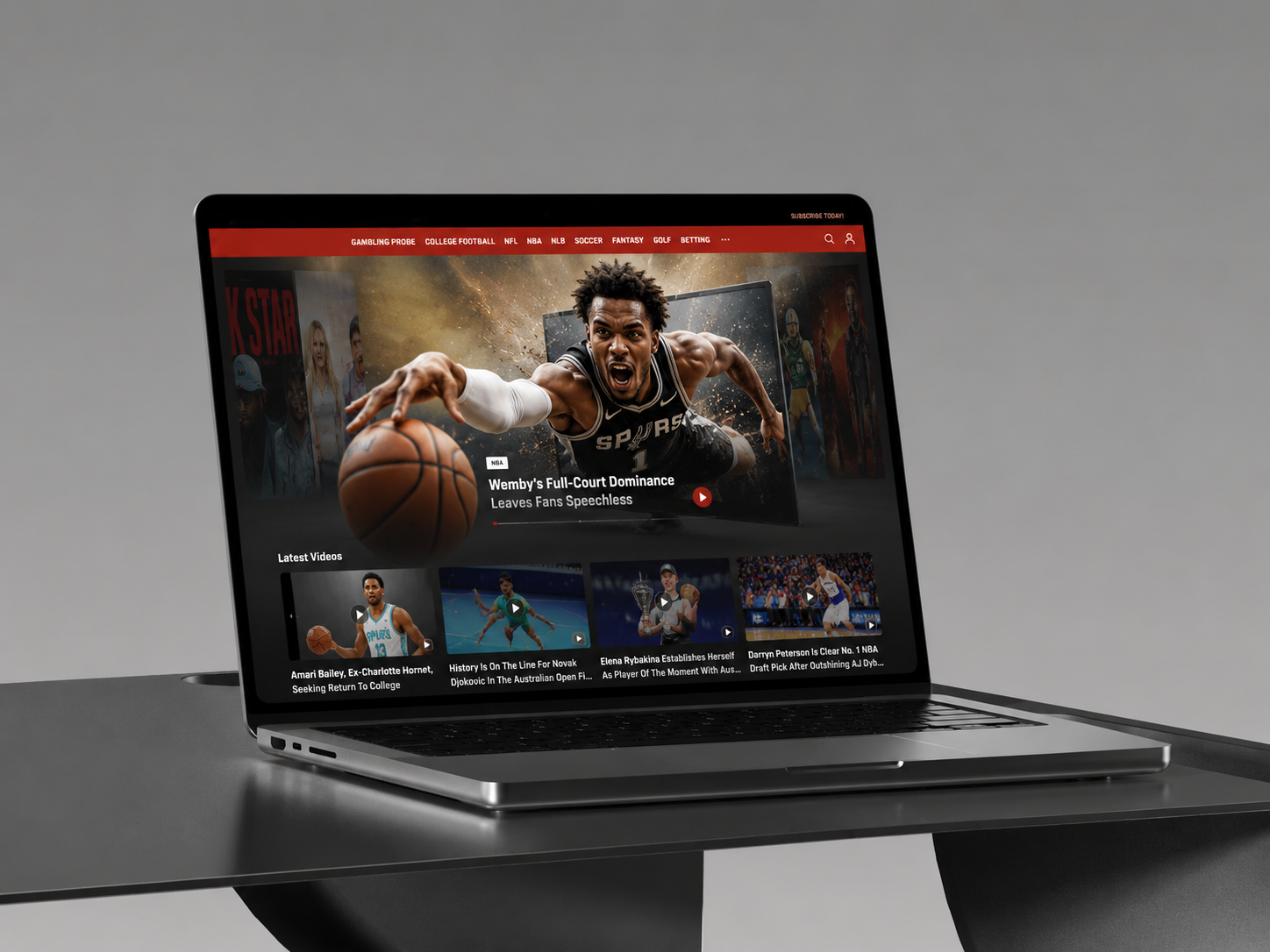
Designing a large-scale video hub platform for a leading sports media publisher, focused on increasing engagement, recirculation, and on-site video consumption through tailored experiences for both short-form and long-form content.
*This project was created as part of my work at a global media-tech company. Some visuals and details have been modified to respect client confidentiality.
My contribution to this project focused primarily on the video page experience and selected hub page components, created in close collaboration with Product, Design, and Business stakeholders.
A leading global sports media publisher was facing a growing challenge:
The Problem
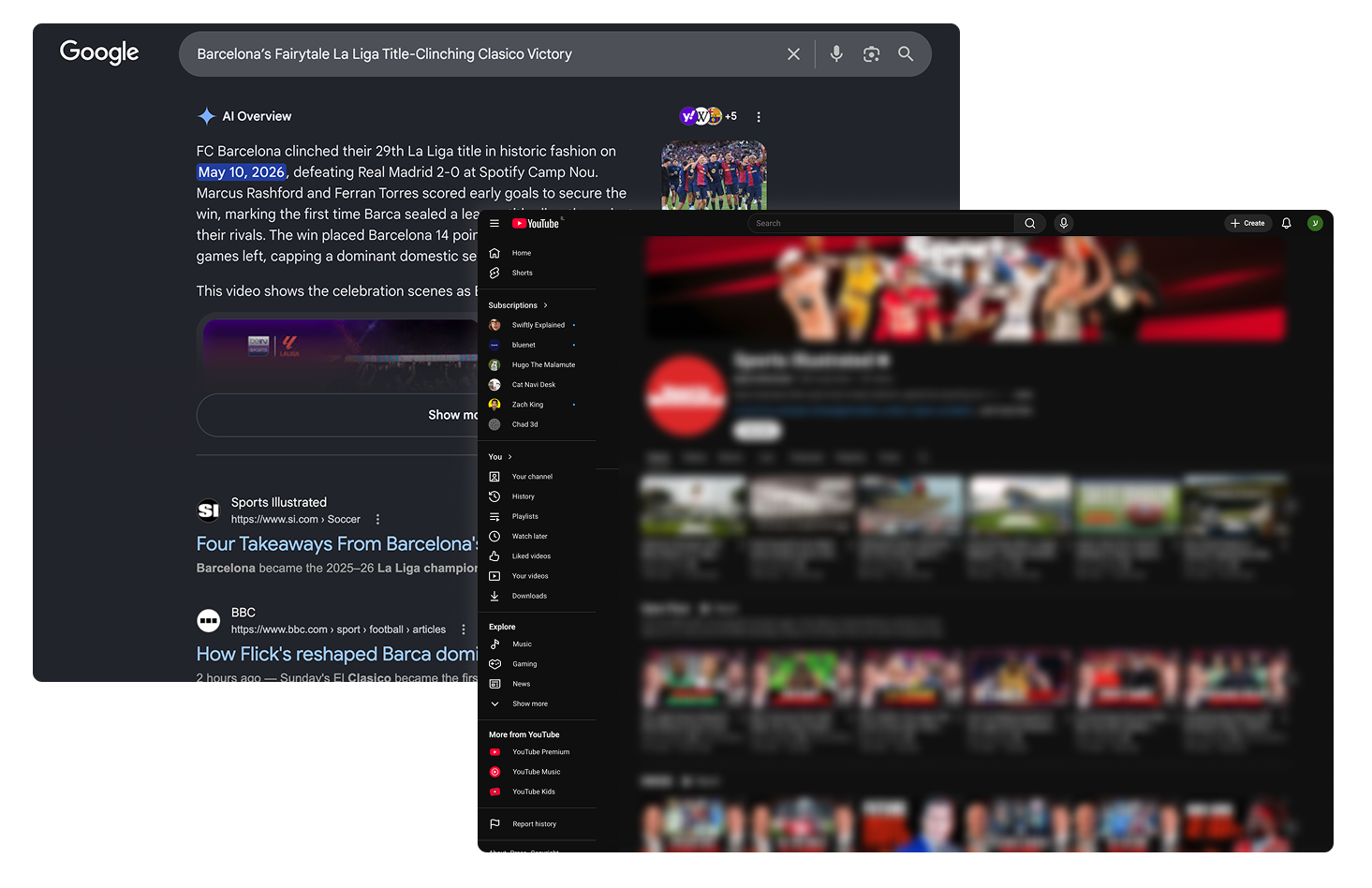
With the rise of AI-powered search experiences and content summarization tools, users increasingly consume information directly from search results without entering publisher websites. At the same time, audience behavior has shifted toward short, visual, and highly consumable video content.
The publisher already owned a large ecosystem of successful video series distributed across platforms like YouTube, generating significant engagement and viewership. However, because this content primarily lived outside the publisher’s own platform, it contributed little to on-site engagement or monetization.
The Goal
This project was created to bring video consumption back into the publisher ecosystem.
The goal was to create a centralized video ecosystem that increases on-site engagement, content discovery, and recirculation through both short-form and long-form viewing experiences.
Approach
Working closely with the Product Manager, we approached the solution as a connected content ecosystem rather than a standalone video page.
The focus was to create a system that supports deep content exploration while maximizing engagement and recirculation.
The platform was structured around several key layers:

A centralized hub aggregating different content types

Dedicated series pages for specific topics and categories

Separate viewing experiences for short-form and long-form content

Monetization flows adapted to different viewing behaviors and durations
01 Hub Homepage
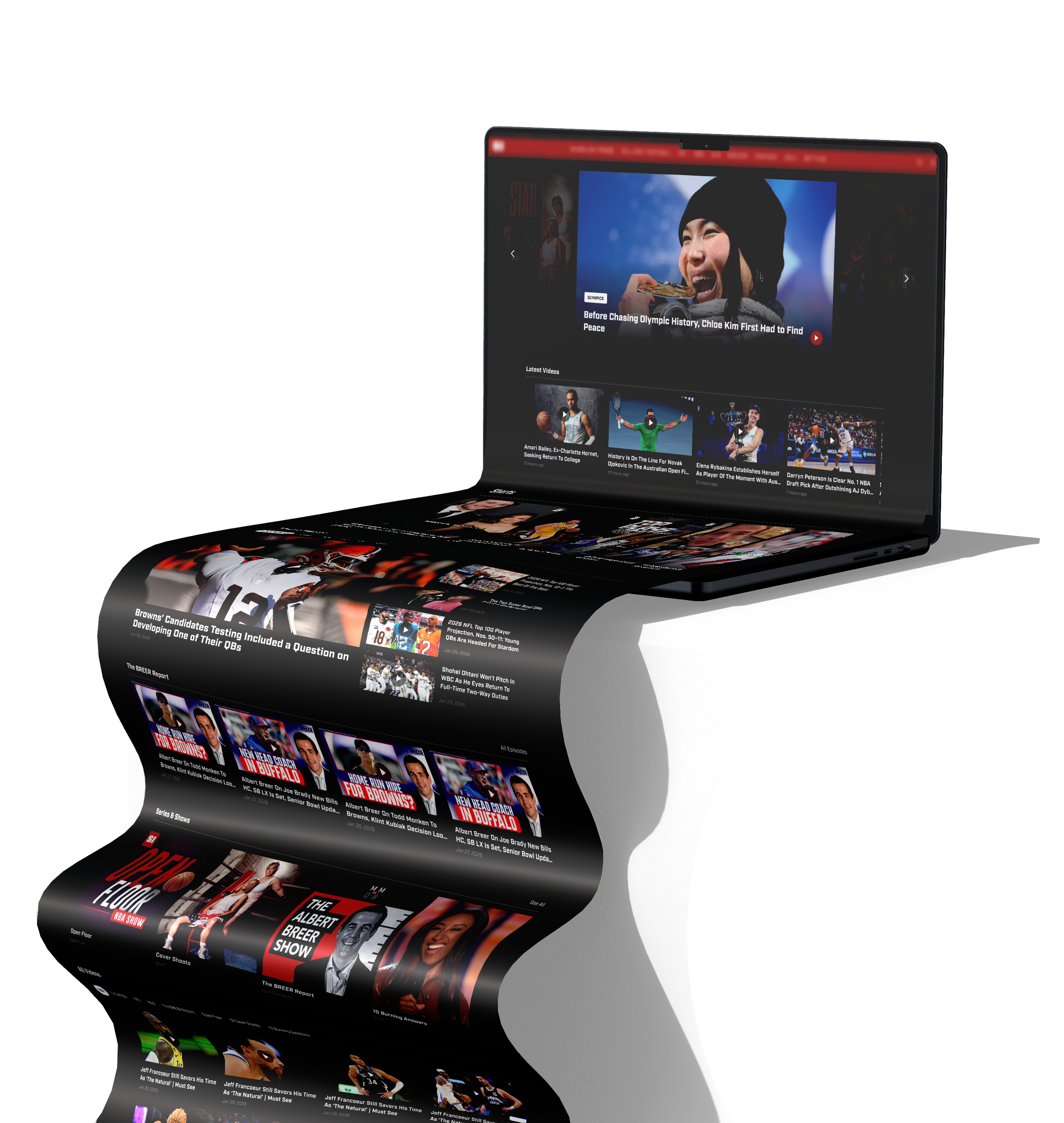
The hub page was designed as a layered content ecosystem, where each section serves a different viewing behavior and discovery goal.
Rather than stacking repetitive content rails, the experience was structured to balance editorial priorities, content freshness, binge behavior, and efficient navigation across large volumes of video content.
Hero Component
The hero section serves as the primary entry point into the experience, immediately providing users with high-value “watch now” options.
The component was designed to adapt dynamically based on editorial priorities - supporting featured series, live highlights, promotional content, or major events - while reinforcing premium and curated content selection.
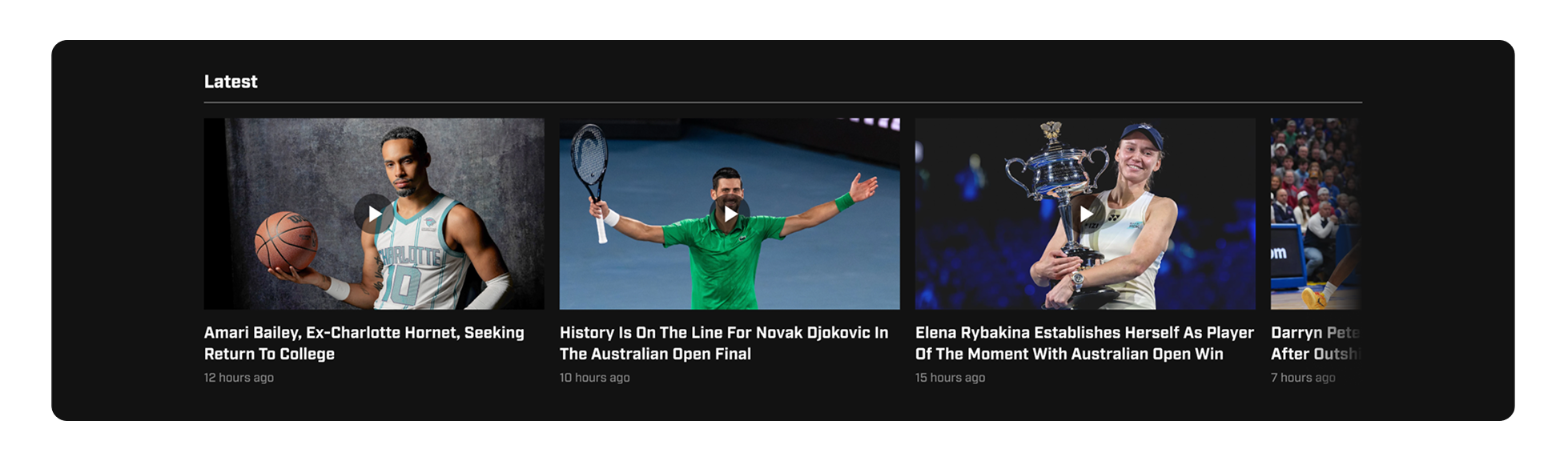
Latest Videos Rail
The Latest Videos rail was designed to communicate freshness and continuous activity across the platform.
By surfacing newly published content in a lightweight horizontal browsing experience, the section encourages quick engagement while reinforcing that the hub is constantly updated.
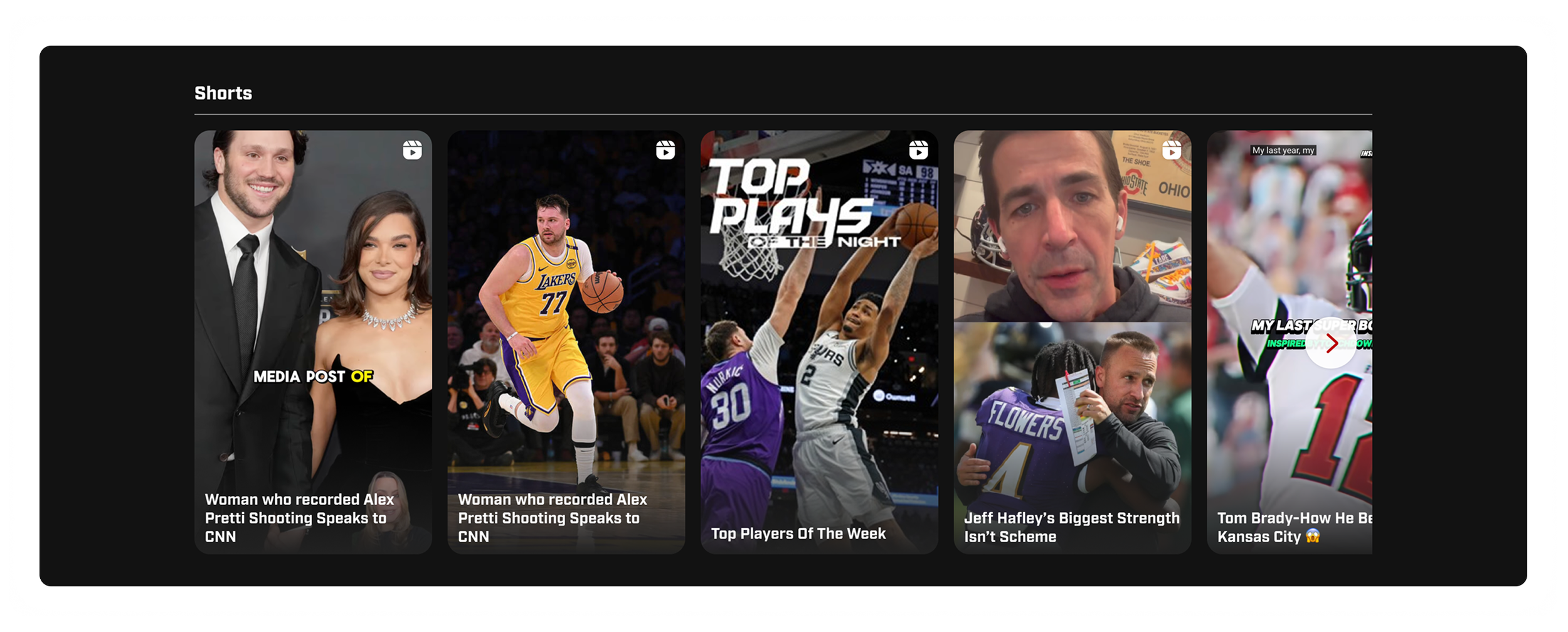
Vertical Content Rail
The vertical rail was introduced as a fast-consumption layer within the experience.
Unlike the more immersive long-form sections, this component supports rapid browsing and quick catch-up behavior optimized for shorter attention spans and snackable content consumption.
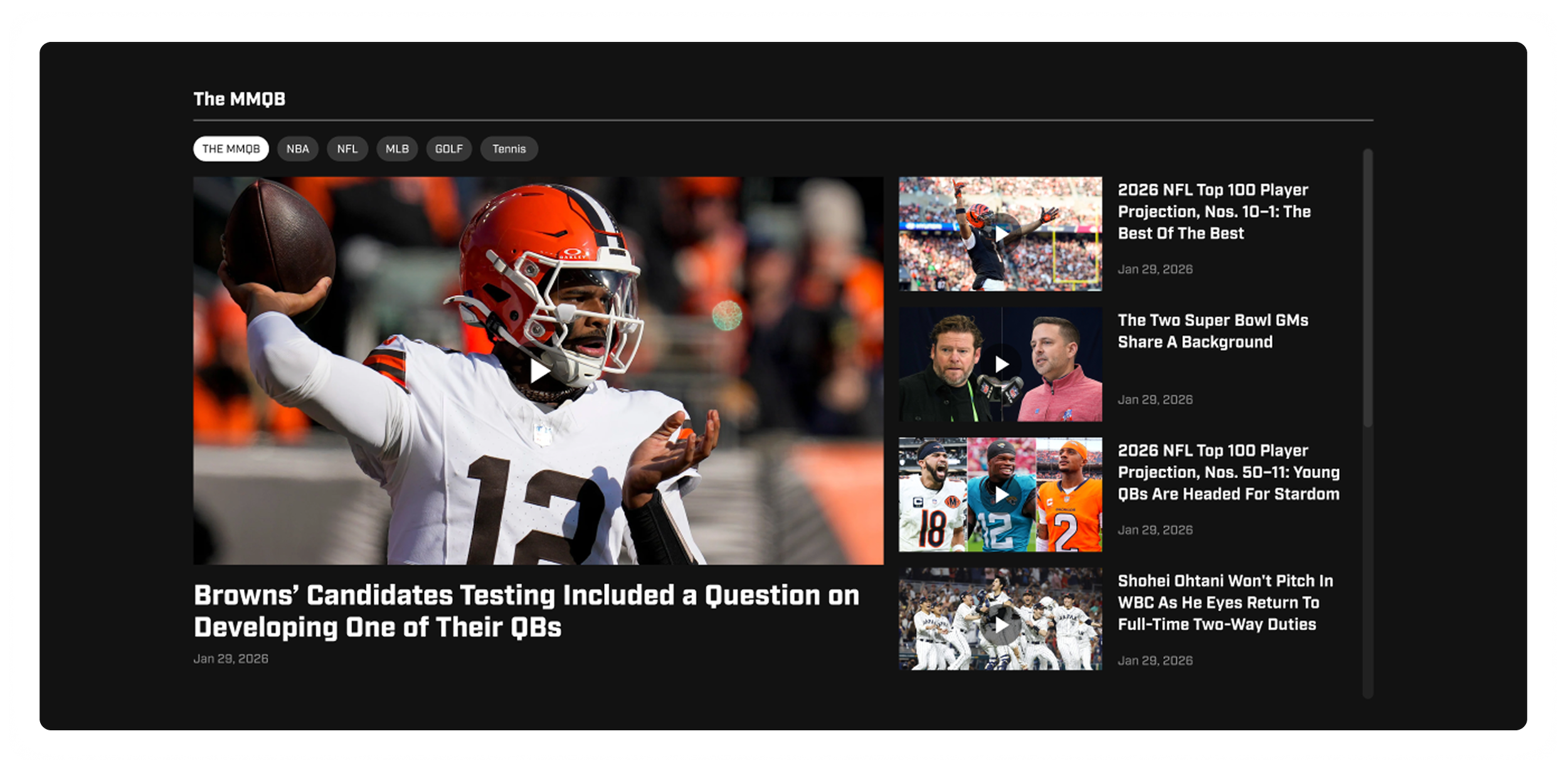
Playlist Component
The playlist component was designed to provide users with a more focused and controlled viewing flow.
Instead of overwhelming the page with repetitive rails and excessive choices, playlists create clearer thematic grouping and help reduce cognitive load while still encouraging continuous viewing.
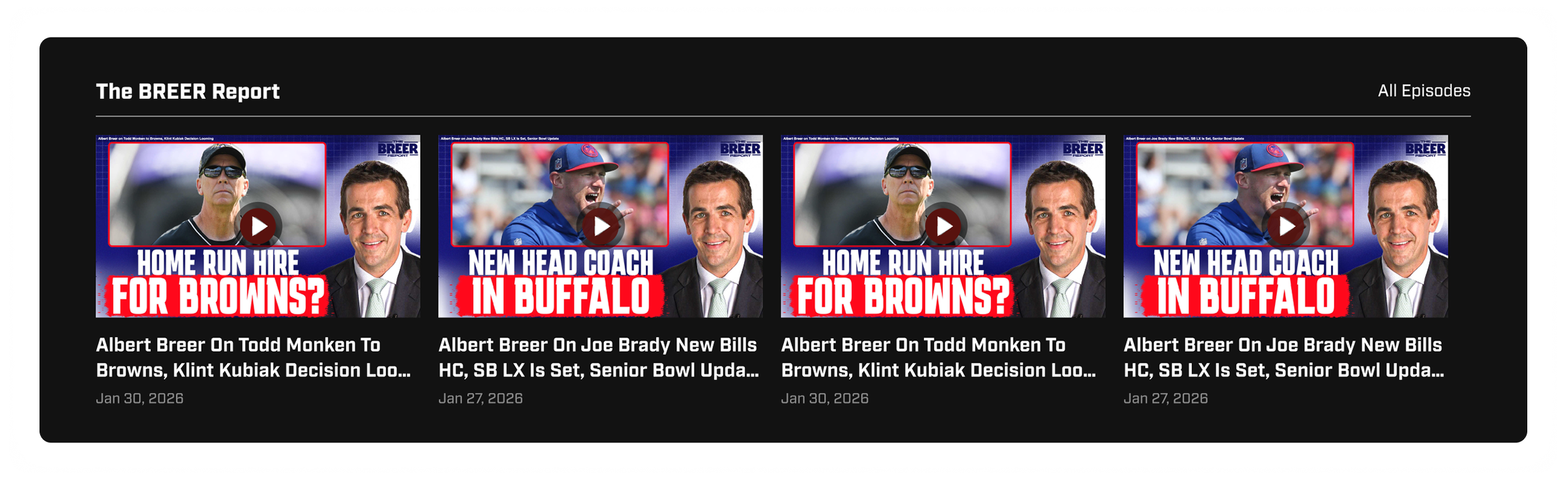
Signature Series Rail
This section highlights the publisher’s flagship in-house series and acts as a strong editorial anchor within the experience.
Rather than functioning as another generic content rail, it reinforces brand identity and gives premium editorial content a dedicated presence within the hub.
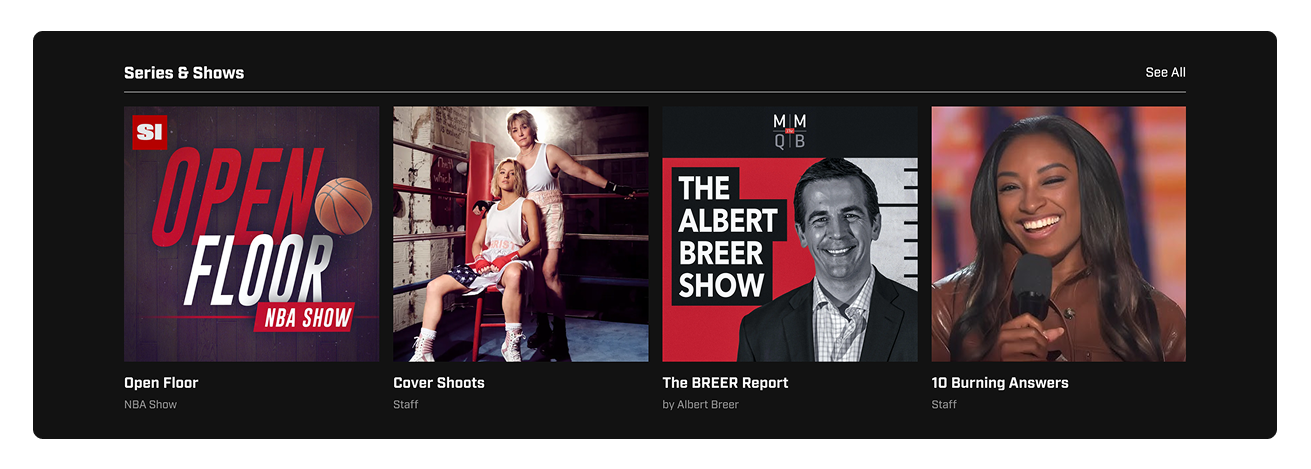
Series & Shows Component
The Series & Shows section was designed to support deeper programming discovery across the platform.
By surfacing structured content collections and recurring formats, the component helps users explore the publisher’s broader video ecosystem while reinforcing the platform’s premium content offering.
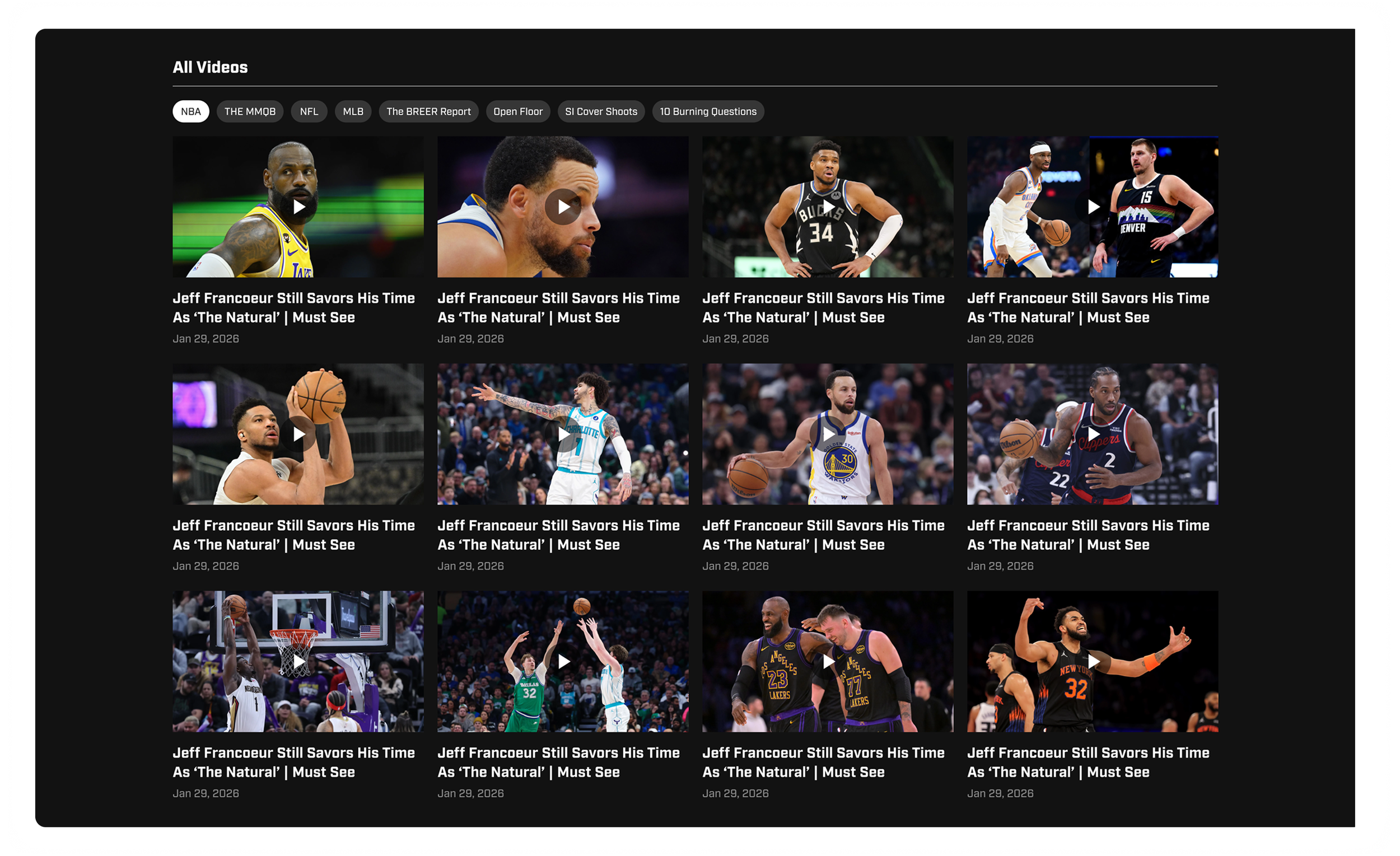
All Videos Component
The All Videos section serves as the platform’s broad discovery and fallback layer.
It enables users to freely browse the full content library, supporting both intentional search behavior and exploratory consumption patterns across large content volumes.
02 Video Page
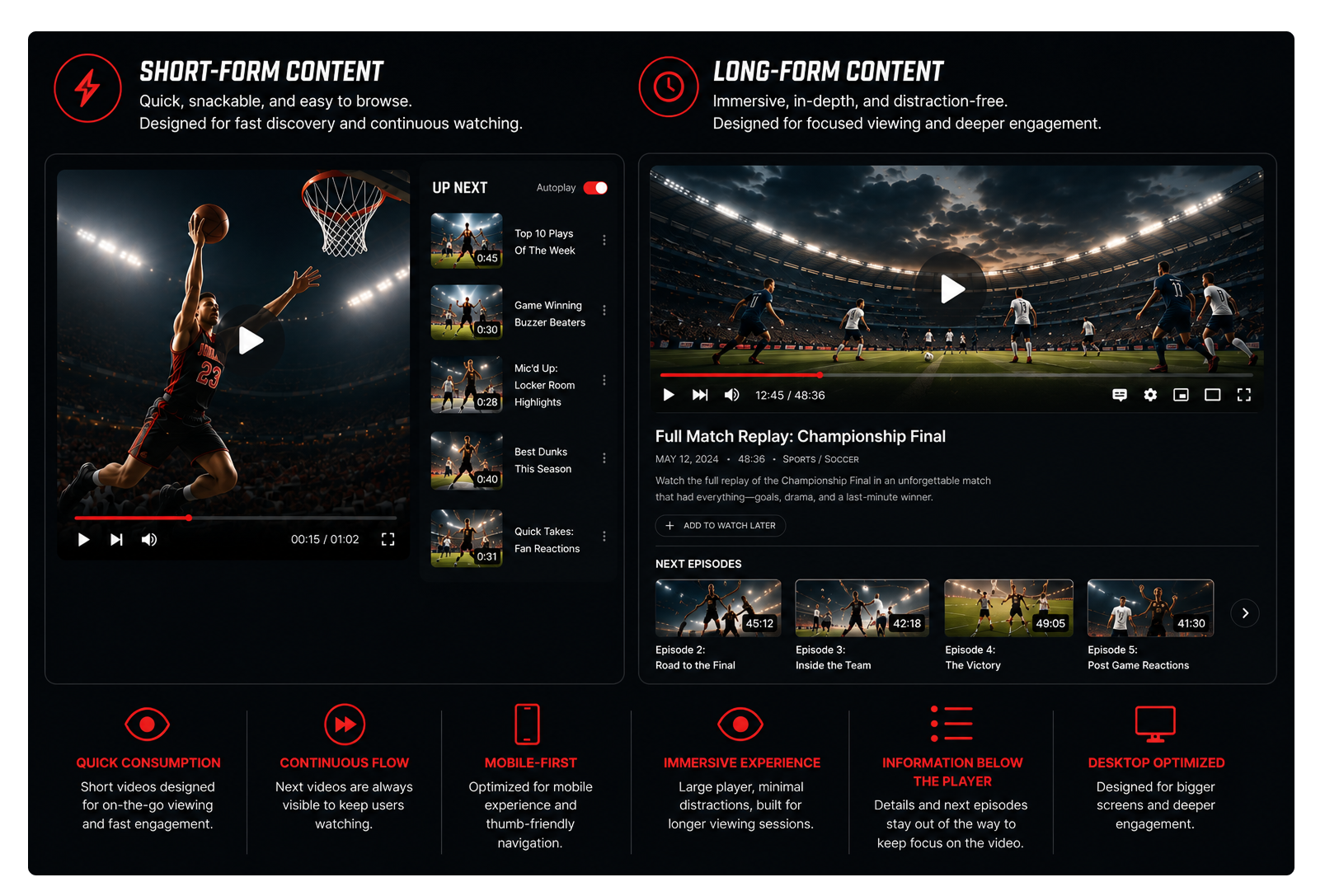
The video experience was designed around two distinct consumption behaviors:
Short-form and long-form viewing.
Research and behavioral analysis showed clear differences between fast, snackable consumption patterns and longer, immersive viewing sessions. These insights shaped separate page structures, content flows, and monetization approaches for each experience.
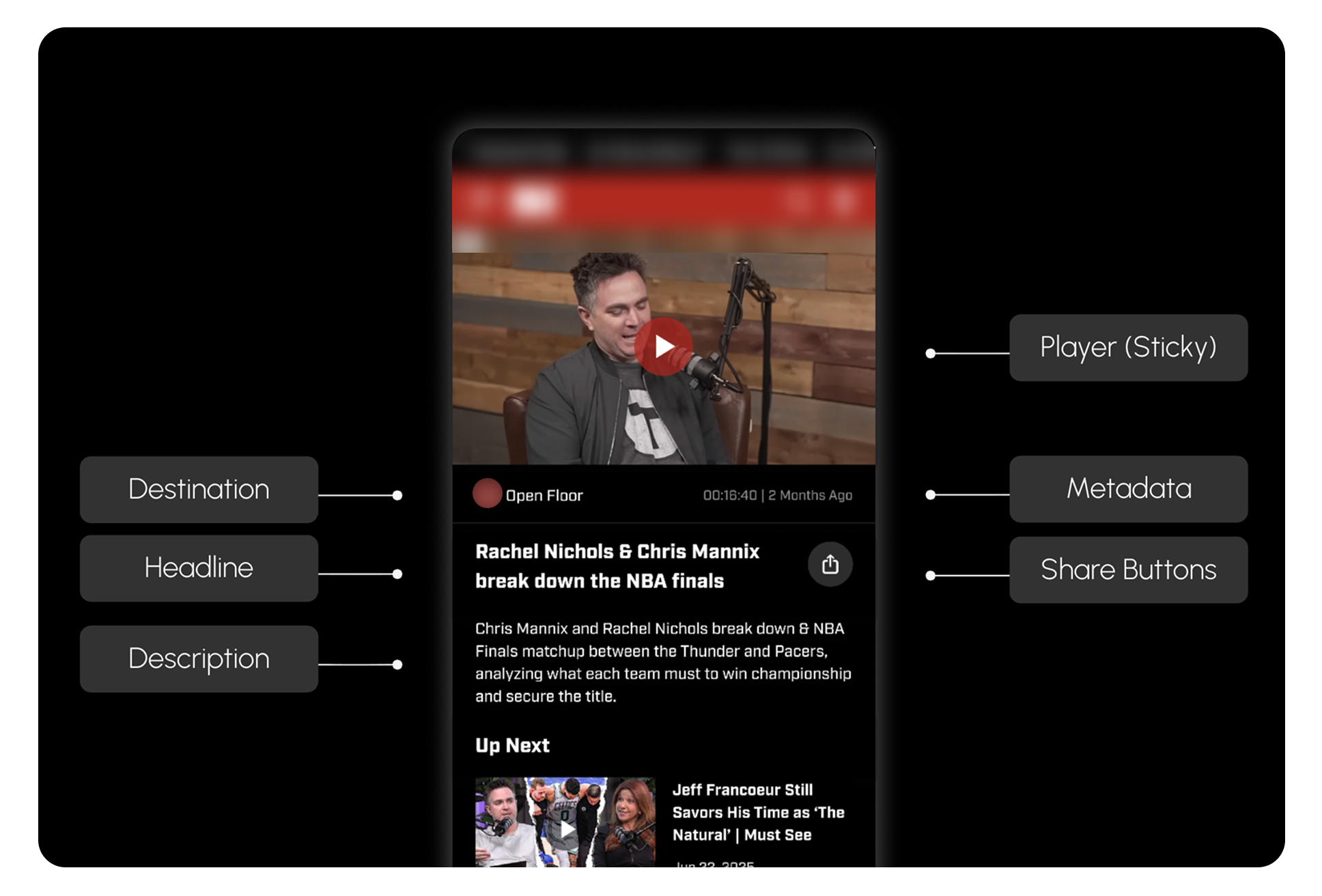
Both versions were built around a modular structure combining:
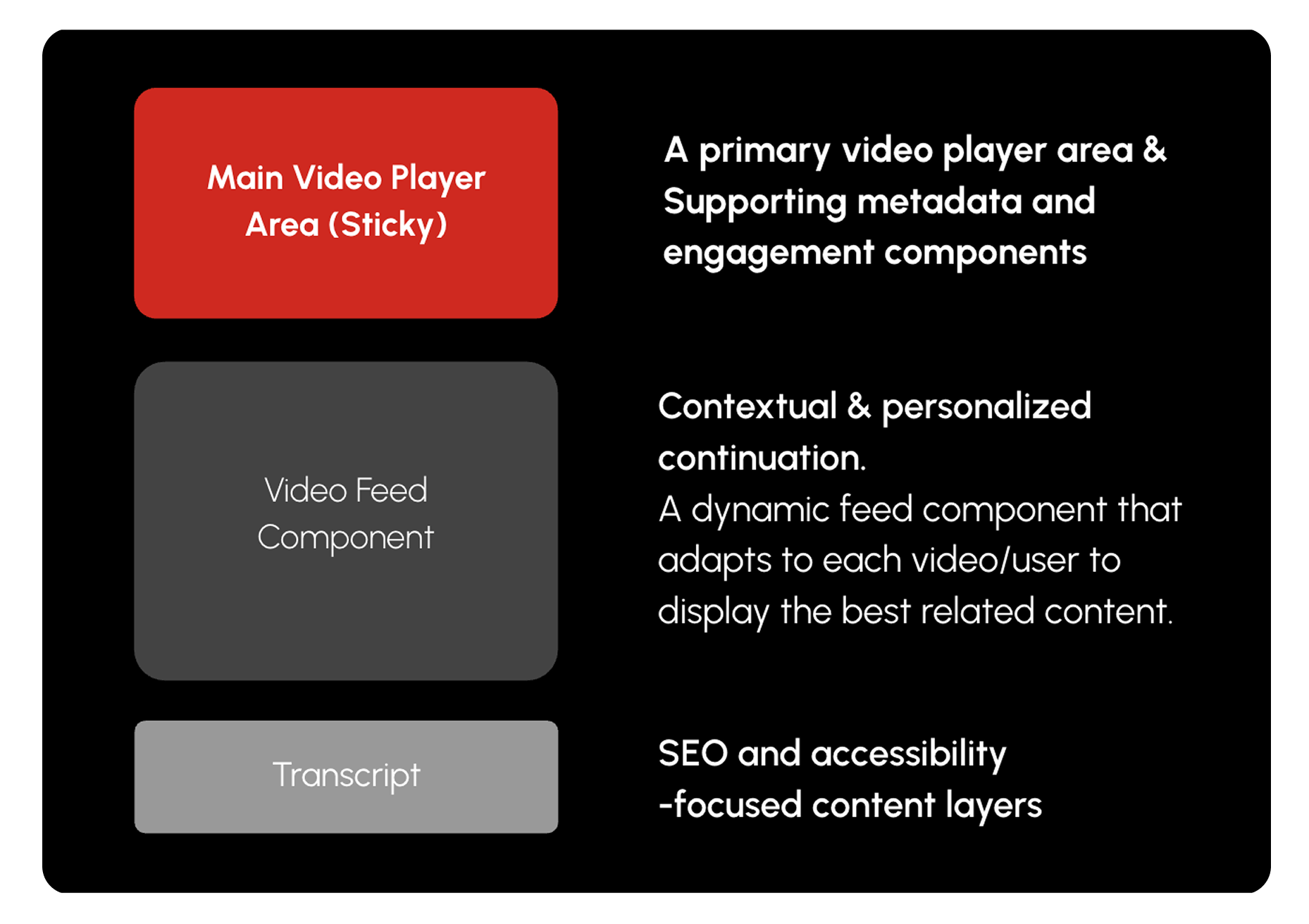
Main Video Player Area
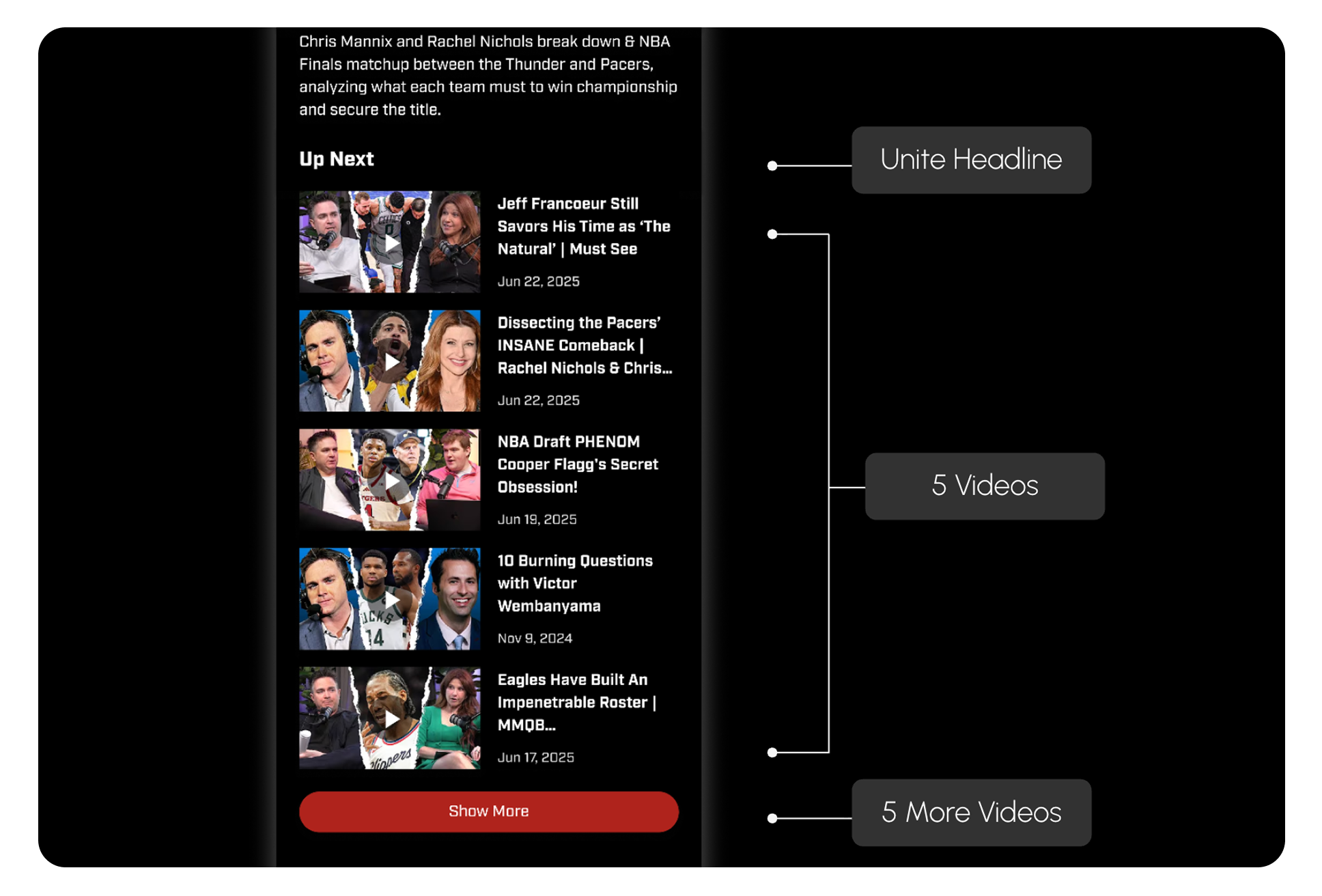
Video Feed Component
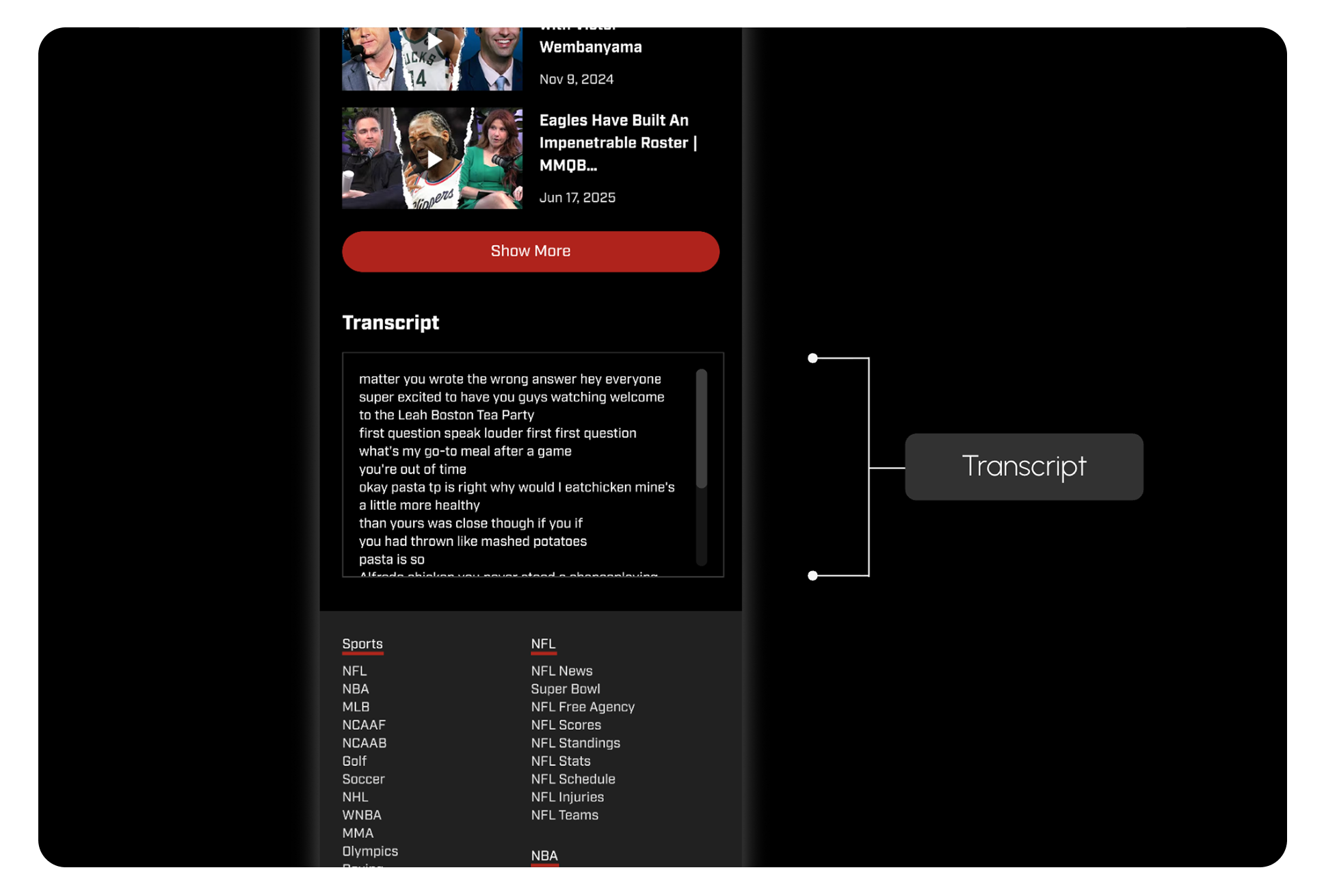
SEO & Accessibility
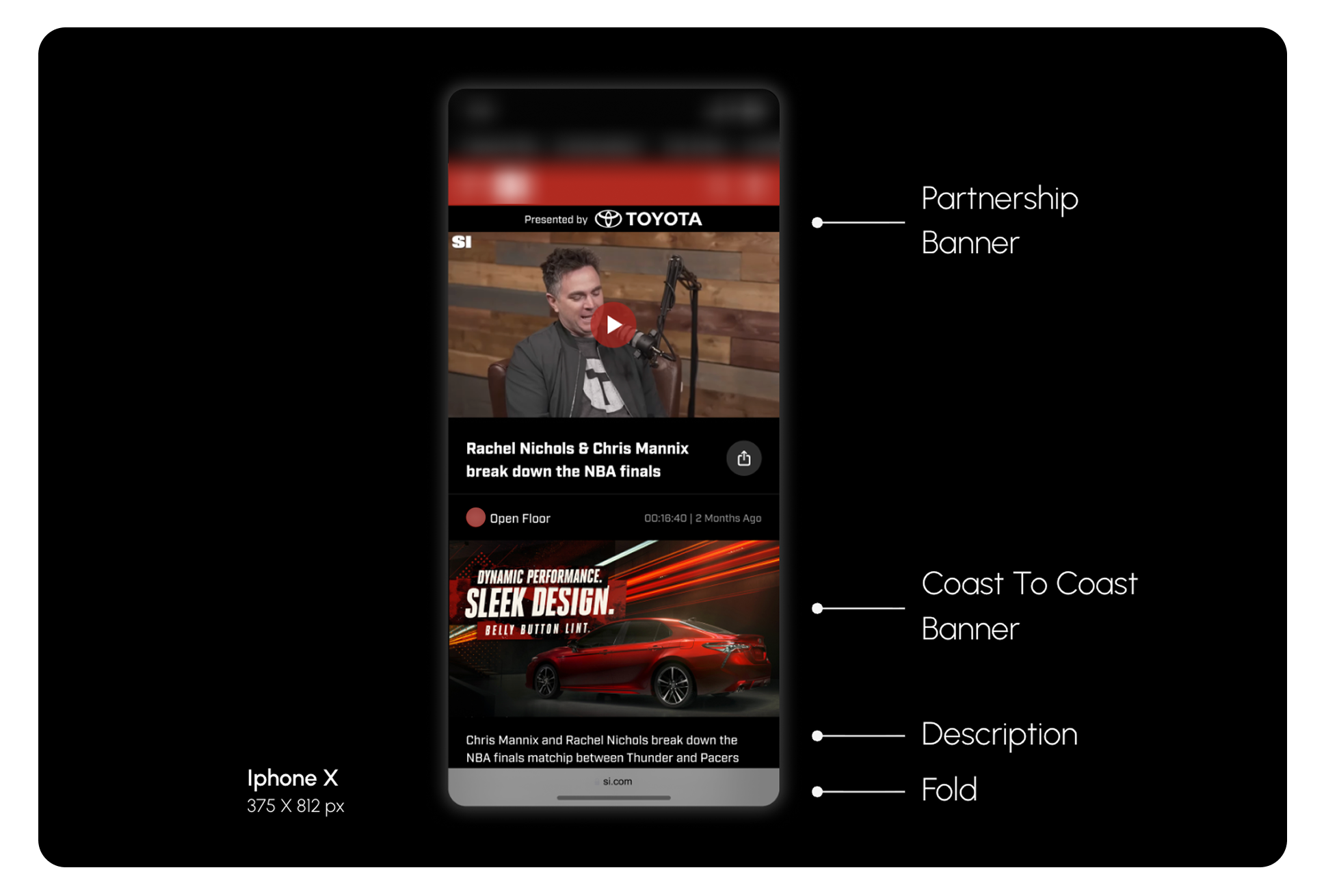
Balancing Engagement & Monetization
One of the biggest challenges in the project was balancing user experience with monetization requirements.
Because advertising is a core business model for the publisher, a large portion of the above-the-fold area needed to remain dedicated to monetization placements. After exploring multiple layout directions, the final solution placed a banner directly below the player.